It’s been a while since we’ve posted a blog on bread with dad, and my apologies for that. With moving house and exploring moving countries it has been a little hectic here!
Those of you have read any of my books will know of my love of France, and it is on this exploration trip of living here permanently myself and Regan have been testing steak.
Getting a correctly cooked steak is pretty consistent these days, even in the UK, so exploring the different degrees of ‘doneness’ is a fun thing to do with your 5-year old (she tells me she’s five and a HALF). What we also do is explore and teach the different cuts of beef and how to prepare the different cuts to make the tastiest steak.
We’ve probably all tried Filet Steak, Sirloin Steak and Rump Steak and most likely T-Bone or Rib-Eye Steak, but many I’m guessing don’t delve deeper and discover the tasty cheaper cuts. In France, mostly you see Entrecôte – Fore rib steak; Faux-Filet – Sirloin steak with a different name in each English speaking country; Filet – Fillet, tender, juicy, expensive in most countries. We like Bavette – Flank steak and Onglet – Hanger steak which are very tasty cuts and usually can be bought at bargain prices.
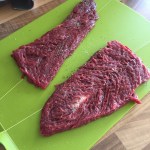
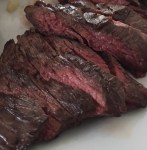
Today we’ve used Onglet, which has a similar texture to Bavette in that it is of a feather like texture and is full of flavour whether cooked rare; medium; well-done or somewhere in between, or should I say Bleu; Saignant; À Point – Perfectly cooked; Bien Cuit – Well done. In France that is a medium to well-done steak; it will still be pink inside, or Très Bien Cuit – An exceptionally well-done steak; however, “très bien cuit” is not in any French chef’s dictionary though it will be clearly understood. Do not order France’s popular Steak Frites very well-done as that will bring you fried or grilled leather.
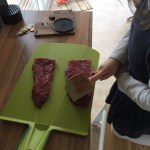
As with all steak cooking, or beef cooking in general, you want the beef to be at room temperature so take it out of the fridge well before cooking time. With bavette and Onglet we give it a bit of a bash with a meat tenderising hammer (Regan likes doing this), we then drizzle a little oil and grind a little pepper, we then leave until ready to cook before grinding a little salt on each side.
I’ve read a few chefs/cooks who suggest oiling the pan rather than the meat, but with these cuts I find oiling the beef early on helps tenderise the beef. If we’re doing filet steak I do add a little oil and butter to the pan so I can baste the steak towards the end of it’s cooking time, as a nicely glazed crust gives great flavour!
For the Onglet, before cooking we’ve blanched off some green beans (haricot vert) as we’ll toss these in butter and garlic whilst the steak rests.
Get the pan you’re going to cook the steak in, hot and then turn the heat down a little, grind the salt on to the steak just before adding to the hot pan and cook for 3 minutes each side. We tend to leave the steak for 3 minutes each side, but we have tried the turn every 1-minute and it works fine too, I guess I’ve just done it this way for too long and no point in fixing something that isn’t broke!
Once cooked, rest the meat for at least 2-minutes on a plate that will collect the juices, as we pour these over the steak before carving and serving. We always slice the steak with a sharp knife to serve, but that is not compulsory.
While the steak is resting pop the green beans in to boiling water for a couple of minutes and in a frying pan heat some butter and olive oil, with thin slices of garlic and salt and pepper. Drain the beans and toss them in the frying pan to coat them before serving. YUM!
Serve the steak and beans and enjoy!
 bread with dad